How St. Clare’s turned reluctant writers into pupils who can’t wait to write
Claire Tidgwell, Assistant Headteacher and Year 6 teacher at St. Clare’s Catholic Primary School in West Yorkshire, is one of Olex’s most committed Champions. Part of the Blessed Christopher Wharton Catholic Academy Trust, St. Clare’s took on Olex to tackle familiar classroom pressures: assessment bias, the burden of marking, and a cohort of children who simply did not want to write. The impact has been significant.
An honest start
Claire’s first impression? She was daunted. “That first time I uploaded work, I found it quite challenging.” Rather than giving up, she reached out to the Olex team, got hands-on support the very next day, and persevered. Within weeks, she was uploading a full class set of writing in under 20 minutes.
Her advice to any teacher in that same position: keep going.
Personalised feedback within minutes – in the same lesson
Before Olex, writing marking was something Claire dreaded: a long evening alone with a pile of books. Now, pupils draft their writing in the morning, upload before lunch, and return to personalised, framework-aligned feedback the same afternoon – ready to act on it straight away.
What previously took two to three hours now takes around 20 minutes in class. That time has gone back to where it belongs: into 1-2-1 writing support sessions with pupils, sharper lesson planning, and being present in the room.
Confidence in assessment – backed by data
Marking writing has always carried an element of subjectivity. Claire was candid about this: when you know your pupils well, it is easy to bring assumptions to the page before you have even read a word. Olex assesses work against the teaching standards consistently and objectively, giving Claire a reliable second perspective that sits alongside her own professional judgement rather than replacing it.
The result is a teacher who trusts herself more, not less. “It just reassures you. You’re not doubting yourself all the time.” For a Year 6 teacher with moderation on the horizon, that matters. Claire can now point to clear, consistent data to support her assessments – not as a crutch, but as evidence that her judgement was right all along.
Turning reluctant writers into enthusiastic ones
Perhaps the biggest impact has been on the pupils themselves. Claire had a group of reluctant boy writers who, in her words, simply did not engage. That has changed.
“They want to write now. They want to include description. They want to make their writing better.”
The turning point came the first time the class used the Imaginator, bringing their written work to life visually. The reaction was immediate – a genuine wow moment that Claire still talks about. Since then, writing quality and descriptive language have improved markedly, because pupils now have a purpose. They want to see their words come to life on screen, and that desire is driving better writing every time.
Growing impact across the Trust
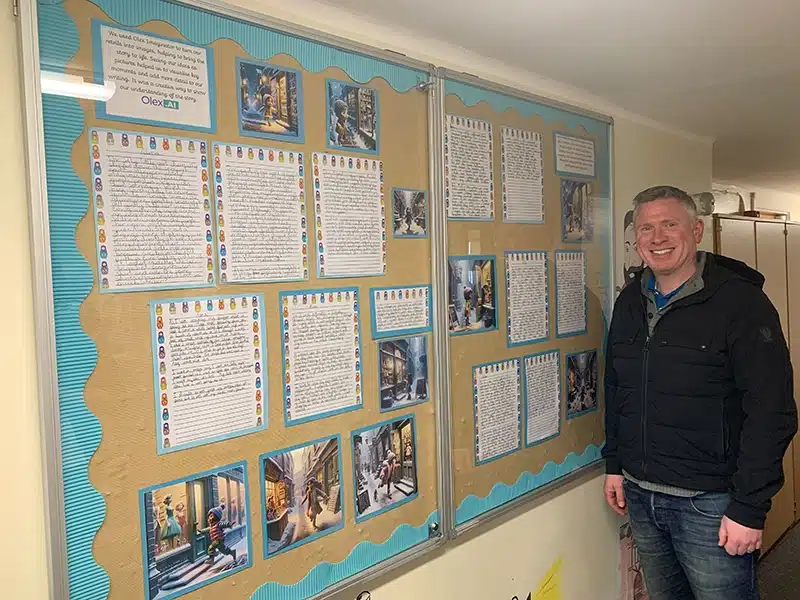
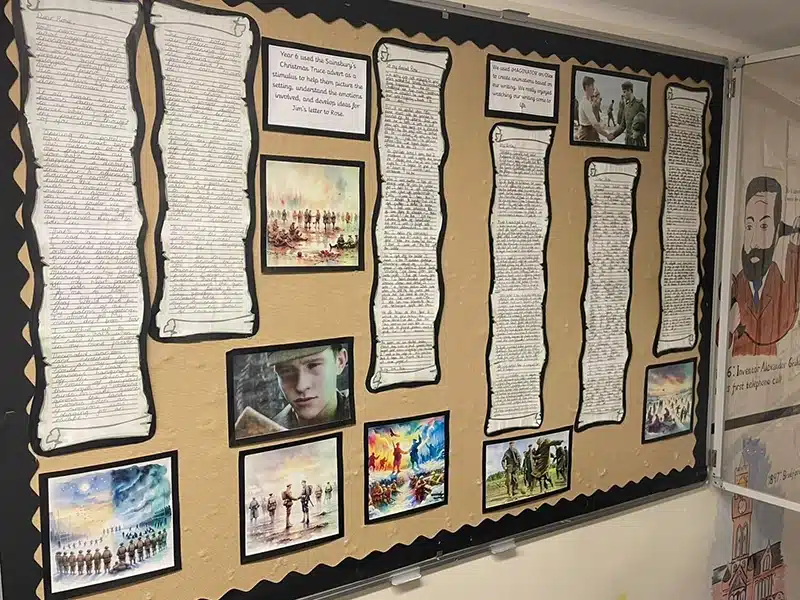
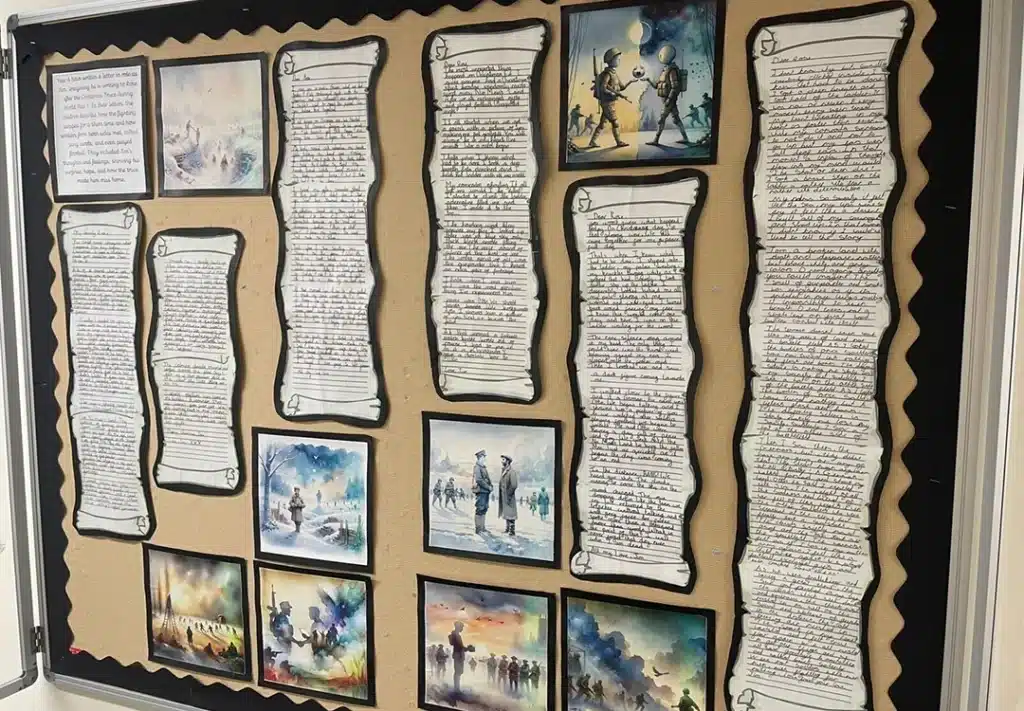
St. Clare’s is now using Olex across Years 4, 5 and 6, with a full KS2 rollout planned for the next academic year. Walk the corridors at St. Clare’s and you will see exactly what that looks like in practice: vivid Imaginator artwork, created from the pupils’ own writing, displayed proudly on the walls for the whole school to see.
For any school considering making the same journey, Claire’s advice is simple: “Keep going, persevere, don’t give up – because you will see a result!”